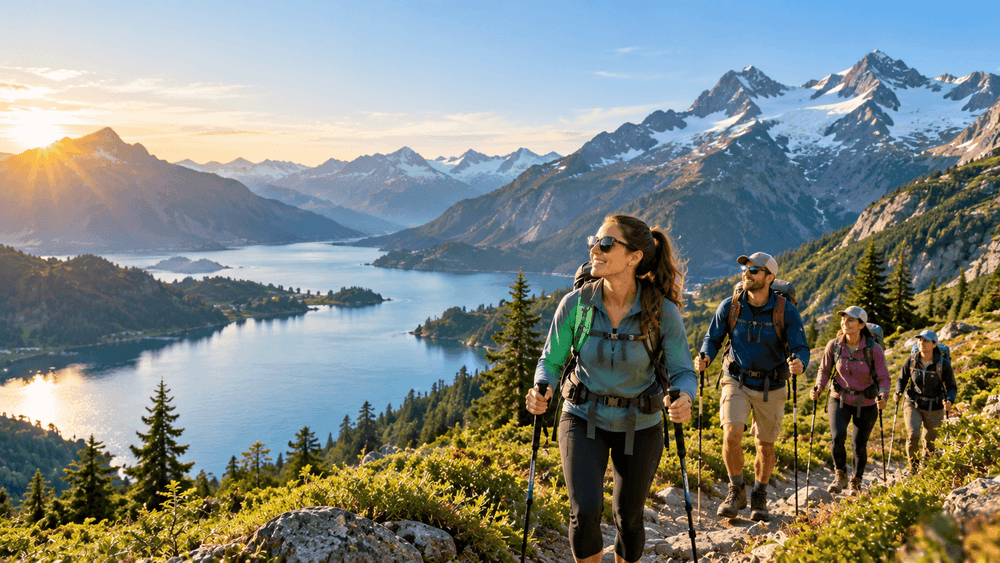
Adventure travel has changed.
For years, the word “adventure” brought to mind long treks, remote campsites, extreme sports, and physically demanding expeditions. But today's travelers are looking for something different. They still want to get outside, see wild landscapes, move their bodies, and experience places beyond the typical tourist trail. They just don't necessarily want to sacrifice a comfortable bed, a good meal, or a relaxing evening to do it.
Quick travel note
For travelers who want more than traditional sightseeing but aren't interested in extreme adventure, soft adventure offers a flexible middle ground.
That is where soft adventure travel comes in.
Imagine hiking through a rainforest in the morning, swimming beneath a waterfall in the afternoon, and returning to a beautiful lodge for a comfortable dinner in the evening.
Or spending the day kayaking along a quiet coastline before ending it with a sunset, a great meal, and a comfortable room.
This is the new idea of adventure: more nature, more experiences, and less unnecessary discomfort.
What Is Soft Adventure Travel?
Soft adventure travel combines outdoor exploration and physical activity with comfort, flexibility, and relaxation.
Instead of choosing between a luxury vacation and an active adventure, travelers can have both.
A soft adventure trip might include hiking, wildlife watching, kayaking, snorkeling, cycling, horseback riding, surfing, or exploring national parks. The difference is that these experiences are usually accessible to a wider range of travelers and are balanced with comfortable accommodation and downtime.
You don't have to be an experienced mountaineer.
You don't have to carry everything you own on your back.
And you certainly don't have to spend every night sleeping in a tent.
The idea is simple: experience more without making the journey unnecessarily difficult.
Why Soft Adventure Travel Is Becoming More Popular in 2026
Travelers are becoming more selective about how they spend their time away from home.
A vacation is no longer simply about checking famous landmarks off a list. Many people want to return home feeling that they actually experienced a destination.
That means spending time outdoors, discovering local landscapes, learning about wildlife, eating regional food, and participating in activities that create memories.
At the same time, travelers are increasingly conscious of burnout.
After months of work, screens, meetings, traffic, and everyday responsibilities, a vacation that requires waking up at 5 a.m. every day and moving between hotels may not feel like a vacation at all.
Soft adventure offers a middle ground.
You can be active without exhausting yourself.
You can explore without rushing.
And you can experience nature without giving up the comforts that make a trip enjoyable.
Soft Adventure vs. Traditional Adventure Travel
The difference isn't necessarily about how adventurous the experience is.
It's about how the experience is designed.
Traditional adventure travel may involve challenging terrain, remote destinations, long hikes, camping, technical activities, or physically demanding expeditions.
Soft adventure tends to focus on accessible outdoor experiences, shorter activities, comfortable accommodation, and a more flexible pace.
For example, traditional adventure might mean spending several days trekking through remote mountains.
Soft adventure could mean hiking through a national park for several hours and returning to a comfortable hotel or eco-lodge that evening.
Both can be rewarding.
The right choice depends on the traveler.
What Makes a Great Soft Adventure Trip?
A well-designed soft adventure vacation usually has four important elements.
1. A Beautiful Natural Setting
Nature is at the heart of the experience.
Rainforests, mountains, coastlines, national parks, lakes, waterfalls, and wildlife-rich landscapes create the backdrop for the journey.
The destination itself becomes part of the adventure.
2. Activities That Feel Rewarding, Not Punishing
The goal isn't to see how exhausted you can become.
A good activity should leave you with a sense of achievement while still allowing you to enjoy the rest of the day.
A rainforest hike, guided wildlife walk, kayaking trip, snorkeling excursion, or scenic cycling route can provide that balance.
3. Comfortable Places to Stay
After spending several hours outside, having a comfortable place to return to makes a difference.
Boutique hotels, eco-lodges, wellness retreats, private villas, and thoughtfully designed resorts can all work beautifully with soft adventure itineraries.
Comfort doesn't have to remove the sense of adventure.
In many cases, it enhances it.
4. Time to Slow Down
This may be the most important part.
A soft adventure itinerary shouldn't be packed from sunrise to sunset.
Leave time for a long breakfast.
Sit beside the ocean.
Read a book.
Take a swim.
Watch the sunset.
The empty spaces between activities are often where a trip becomes memorable.
12 Soft Adventure Experiences Worth Trying
Soft adventure can look completely different depending on the destination.
You don't need to climb a mountain or jump out of an airplane to experience something extraordinary.
1. Rainforest Hiking
Few experiences create a stronger connection with nature than walking beneath a rainforest canopy.
A guided rainforest hike can introduce travelers to tropical plants, birds, monkeys, frogs, waterfalls, and other wildlife while keeping the experience accessible.
Costa Rica is particularly well known for combining rainforest experiences with comfortable accommodations and other activities.
2. Wildlife Watching
Wildlife encounters can turn an ordinary vacation into something unforgettable.
Instead of visiting an animal attraction, soft adventure travelers can explore natural habitats with local guides who understand the landscape and wildlife.
From tropical birds and monkeys to sea turtles and marine life, wildlife watching can be both relaxing and exciting.
3. Kayaking
Kayaking offers a completely different perspective on a destination.
You might paddle along a calm coastline, through mangroves, across a quiet lake, or down a gentle river.
It provides physical activity without requiring extreme athletic ability, making it an excellent introduction to adventure travel.
4. Snorkeling
You don't need to be a professional diver to explore the underwater world.
Snorkeling allows travelers to discover coral reefs, tropical fish, sea turtles, and other marine life with relatively little equipment or training.
For beach destinations, it can be one of the easiest ways to turn a relaxing vacation into an active one.
5. Waterfall Adventures
There is something satisfying about walking through nature and eventually arriving at a waterfall.
Depending on the destination, the journey might involve a short forest trail, a longer hike, or a combination of walking and swimming.
The reward is not just the waterfall itself but everything you experience along the way.
6. Beginner-Friendly Surfing
You don't need to become a professional surfer to enjoy being in the water.
A beginner lesson with a qualified instructor can turn a beach day into a memorable experience.
Even standing on a board for a few seconds can become one of those stories you remember long after the vacation ends.
7. Scenic Cycling
Cycling lets travelers explore more ground than walking while still moving at a human pace.
Coastal roads, countryside trails, vineyards, villages, and scenic routes can all become part of the experience.
It is particularly enjoyable when the route includes plenty of stops rather than being treated as a race.
8. Horseback Riding
Horseback riding can offer access to landscapes that are difficult to experience from a vehicle.
Depending on the destination, travelers can ride along beaches, through forests, across countryside, or around mountain landscapes.
For beginners, guided rides can make the experience approachable and relaxed.
9. Sunrise or Sunset Hiking
You don't need a full-day trek to experience the magic of hiking.
A short trail timed around sunrise or sunset can create a completely different atmosphere.
The changing light, quieter surroundings, and panoramic views can make even a relatively easy walk feel special.
10. Paddleboarding
Stand-up paddleboarding combines gentle exercise with time on the water.
On calm lakes, sheltered bays, and quiet coastal areas, it can be surprisingly peaceful.
It's the kind of activity that allows you to be active while still enjoying the scenery around you.
11. Nature Photography
Adventure doesn't always require physical intensity.
Sometimes, it simply requires slowing down and paying attention.
Nature photography encourages travelers to notice details they might otherwise miss: the shape of a leaf, the movement of wildlife, morning light through trees, or waves breaking against a quiet coastline.
12. Volcano and Geothermal Experiences
Volcanic landscapes can make a destination feel almost otherworldly.
Visitors can explore volcanic trails, geothermal areas, hot springs, and surrounding forests without necessarily taking on an extreme expedition.
Countries such as Costa Rica, Iceland, and New Zealand offer remarkable opportunities to experience volcanic landscapes in different ways.
Why Costa Rica Fits the Soft Adventure Travel Trend
Few destinations demonstrate the idea of soft adventure as naturally as Costa Rica.
You can start your day with a rainforest walk, spend the afternoon watching wildlife, enjoy a wellness experience later in the day, and still have time to relax beside the Pacific.
The country's appeal comes from this combination.
Nature doesn't have to mean discomfort. Adventure doesn't have to mean exhaustion. And relaxation doesn't have to mean staying at the resort all day.
That balance makes Costa Rica particularly appealing for travelers who want their vacation to feel active, meaningful, and restorative at the same time.
For travelers considering a more immersive experience, Koursair's 8-day Costa Rica Wellness & Adventure Retreat in Drake Bay brings together nature, adventure, and wellness in one itinerary.
The result is a style of travel where the journey itself becomes part of the reward.
The Rise of the “Active but Comfortable” Traveler
Today's adventure traveler doesn't necessarily fit the old stereotype.
They may enjoy hiking but still want a quality hotel.
They may love wildlife but also want a spa treatment.
They may want to explore a national park but don't want to spend every night camping.
They may want to surf in the morning and enjoy a memorable dinner in the evening.
This is the active but comfortable traveler.
And soft adventure is designed around exactly that mindset.
The question is no longer:
“How much discomfort can I handle to have an adventure?”
It's becoming:
“How much can I experience while still enjoying the journey?”
That shift is changing the way people plan adventure vacations.
What We'll Explore Next
Soft adventure opens up a much wider world of travel than many people realize.
Best Soft Adventure Destinations Around the World
The beauty of soft adventure is that you don't have to travel to the most remote corner of the planet to experience it.
Some destinations make it particularly easy to combine outdoor activities with comfortable accommodation, good food, wellness experiences, and time to relax.
From tropical rainforests to European coastlines and volcanic landscapes, these destinations offer different versions of the same idea: explore actively, then slow down.
1. Costa Rica: Rainforests, Wildlife and the Pacific
Costa Rica is almost made for soft adventure.
Few destinations allow travelers to combine so many outdoor experiences within a relatively relaxed itinerary. You can hike through rainforest, look for wildlife, visit waterfalls, explore volcanic landscapes, surf along the Pacific coast, and still have plenty of time to unwind.
The country's diverse landscapes make it particularly appealing for travelers who don't want to choose between adventure and relaxation.
A typical day could begin with a guided nature walk and end with a quiet evening near the ocean.
For travelers interested in combining wellness and adventure, Costa Rica can be especially rewarding.
2. New Zealand: Landscapes Made for Exploration
New Zealand offers a remarkable variety of landscapes in a relatively compact travel experience.
Mountains, lakes, beaches, forests, glaciers, and rolling countryside create endless opportunities for outdoor exploration.
You don't need to plan an extreme expedition to appreciate the country.
Scenic hikes, kayaking, cycling, wildlife experiences, and road trips can all provide a sense of adventure while allowing travelers to return to comfortable accommodation at the end of the day.
For photographers and nature lovers, New Zealand can feel like one enormous outdoor playground.
3. Portugal: Coastlines, Villages and Slow Exploration
Portugal offers a softer version of adventure that works particularly well for travelers who enjoy culture alongside outdoor experiences.
Walk along the dramatic coastline of the Algarve, explore historic villages, cycle through countryside, or spend time on the Atlantic coast.
The country's relaxed pace also makes it easy to combine active days with long lunches, local wine, cafés, and evenings spent wandering historic streets.
Portugal is proof that adventure doesn't always have to involve rugged wilderness.
Sometimes, walking through an unfamiliar neighborhood can be an adventure of its own.
4. Slovenia: Mountains Without the Crowds
Slovenia is a fascinating choice for travelers looking for European nature without building their entire vacation around extreme activities.
The country offers alpine landscapes, lakes, forests, rivers, and charming towns.
Lake Bled is perhaps its best-known destination, but the surrounding region offers hiking, cycling, kayaking, and other outdoor experiences.
You can spend the morning exploring a trail, enjoy lunch beside a lake, and finish the day in a comfortable hotel.
That combination captures the spirit of soft adventure perfectly.
5. Japan: Nature, Culture and Wellness
Japan may not be the first destination that comes to mind when you hear “adventure travel,” but it offers a fascinating combination of movement, culture, nature, and relaxation.
Travelers can walk ancient pilgrimage routes, explore mountain towns, hike through forests, visit temples, discover rural landscapes, and experience traditional wellness practices.
The country also offers an excellent contrast between active exploration and moments of stillness.
One day might involve walking through a historic district for hours. The next could be spent relaxing in an onsen and enjoying a slow meal.
6. Thailand: Tropical Adventure at Your Own Pace
Thailand offers a wide variety of experiences for travelers who want outdoor activities without giving up comfort.
Island hopping, snorkeling, kayaking, hiking, cooking classes, cycling, and jungle excursions can all become part of a soft adventure itinerary.
The country's beaches also make it easy to build rest into the journey.
You might spend one day exploring and the next doing almost nothing except swimming, eating, and watching the sunset.
That's exactly what makes the destination so versatile.
7. Greece: Islands, Coastlines and Active Escapes
Greece is often associated with beaches and relaxation, but its islands and mainland also offer plenty of opportunities for active exploration.
Hiking trails, sea kayaking, snorkeling, sailing, cycling, and coastal walks can add an adventurous dimension to a traditional Greek vacation.
The advantage is that you can follow an active morning with a leisurely lunch overlooking the sea.
There is no need to choose between exploration and relaxation.
8. Norway: Fjords and Outdoor Experiences
Norway offers some of Europe's most dramatic natural scenery.
The fjords, mountains, forests, and coastal landscapes create extraordinary opportunities for hiking, kayaking, scenic cruises, and wildlife experiences.
For soft adventure travelers, the key is choosing activities that match your fitness level.
You don't have to tackle the most difficult trail to appreciate the landscape.
Sometimes, a scenic walk followed by a fjord cruise provides the perfect combination.
9. Canada: Wilderness With Comfort
Canada's huge landscapes offer almost endless opportunities for outdoor experiences.
National parks, lakes, forests, mountains, and coastal regions provide settings for hiking, kayaking, wildlife watching, cycling, and scenic road trips.
The country works particularly well for travelers who enjoy nature but want flexibility in how active their itinerary becomes.
A morning hike doesn't mean the entire day has to be spent outdoors.
You can return to town, enjoy a good meal, and relax before exploring again the following day.
10. Bali: Wellness Meets Adventure
Bali has long attracted travelers looking for wellness, but it can also be an excellent soft adventure destination.
Waterfalls, rice terraces, jungle landscapes, beaches, snorkeling, cycling, surfing, and hiking create plenty of opportunities to stay active.
The island also makes it easy to balance adventure with yoga, spa treatments, healthy food, and relaxation.
For travelers interested in wellness adventure travel, Bali demonstrates how the two styles can work together naturally.
How to Choose the Right Soft Adventure Destination
The best destination isn't necessarily the one with the longest list of activities.
Start with the type of experience you actually want.
If you love wildlife, prioritize destinations with strong nature experiences.
If beaches are important, choose somewhere where water activities and relaxation can coexist.
If wellness is a priority, look for destinations with retreats, spas, yoga, healthy food, and natural surroundings.
And if you're traveling with someone else, consider choosing a destination where you can easily adjust the activity level.
One person can hike while another enjoys a slower morning.
That's another advantage of soft adventure: flexibility.
How Active Do You Need to Be?
This is one of the most common questions people have about adventure travel.
The answer depends entirely on the itinerary.
Soft adventure is designed to be accessible, but that doesn't mean every activity is effortless.
A rainforest hike may involve uneven terrain.
Kayaking requires some upper-body effort.
Cycling can become challenging on hills.
Even a short coastal trail may feel demanding in hot weather.
Before booking an activity, check its duration, elevation, terrain, fitness requirements, weather conditions, and transportation arrangements.
Don't choose an activity because it sounds impressive.
Choose one that you will actually enjoy.
How to Build a Balanced Soft Adventure Itinerary
A common mistake is putting too many activities into one trip.
If you schedule hiking, kayaking, snorkeling, cycling, sightseeing, and a long transfer on consecutive days, the experience can quickly become exhausting.
Instead, think in terms of active days and recovery days.
For example:
Day 1: Arrival and relaxation
Day 2: Nature walk and wildlife experience
Day 3: Beach and wellness day
Day 4: Kayaking or snorkeling
Day 5: Cultural exploration
Day 6: Scenic hike
Day 7: Relaxation and departure preparation
This structure creates rhythm.
You experience the destination without feeling like you're constantly racing the clock.
Soft Adventure and Wellness: A Natural Combination
Adventure and wellness may sound like opposite ideas.
One suggests movement and exploration.
The other suggests rest.
But they can complement each other surprisingly well.
Physical activity can make relaxation feel more rewarding.
A morning hike followed by a massage feels different from spending the entire day inside a spa.
Likewise, a yoga session can prepare you for a day of exploration.
This is why wellness adventure travel is becoming an appealing concept for travelers who want more from their vacation than either pure relaxation or nonstop activity.
Why Small-Group Travel Works Well for Soft Adventure
Soft adventure doesn't have to mean traveling completely independently.
Small-group journeys can provide a useful balance between structure and freedom.
A local guide can handle logistics, explain the destination, organize activities, and introduce travelers to places they might not discover independently.
At the same time, smaller groups can feel more personal than traditional large-scale tours.
For solo travelers, couples, and friends, this can make adventure activities easier to access without requiring every detail to be planned independently.
Soft Adventure for Couples
For couples, soft adventure can create a more memorable trip than spending every day beside a pool.
You could hike to a waterfall together, take a sunset kayak trip, explore a national park, or learn to surf.
The key is balance.
You don't have to turn the vacation into an activity marathon.
Mix active experiences with slow mornings, memorable meals, spa time, and evenings without a schedule.
Sometimes the best part of an adventure is the conversation afterward.
Soft Adventure for Solo Travelers
Solo travelers can also benefit from the flexibility of soft adventure.
Joining a guided hike, wildlife excursion, cooking class, or kayaking experience creates opportunities to meet other travelers while still maintaining personal freedom.
You can spend one day in a group and the next exploring independently.
This flexibility is one reason soft adventure works particularly well for people who want connection without giving up independence.
What to Pack for a Soft Adventure Trip
Packing for soft adventure is mostly about versatility.
Bring comfortable walking shoes or hiking shoes, lightweight clothing, swimwear, sun protection, a reusable water bottle, a small daypack, insect repellent when appropriate, and a lightweight rain jacket for destinations where weather can change quickly.
A power bank can also be useful when you're spending long periods outdoors.
The goal is not to pack for every possible activity.
Choose items that work across multiple situations.
A good pair of walking shoes may be more useful than packing three different types of footwear.
A Simple Rule: Adventure in the Morning, Relaxation in the Afternoon
If you're unsure how to design your first soft adventure vacation, start with a simple rhythm.
Explore early. Relax later.
Morning temperatures are often more comfortable for outdoor activities, and completing your main activity earlier gives you the rest of the day to enjoy the destination without pressure.
You might hike in the morning, have lunch by the coast, spend the afternoon swimming, and enjoy dinner somewhere memorable.
It sounds simple.
That's the point.
The best travel experiences don't always need complicated itineraries.
Soft Adventure Travel in 2026: The New Way to Explore Without Giving Up Comfort
Soft Adventure for Different Types of Travelers
One of the reasons soft adventure is becoming such an appealing way to travel is its flexibility.
You don't have to fit a particular personality or fitness level to enjoy it. The experience can be adapted around the way you like to travel, whether you're planning a romantic escape, a family vacation, a solo journey, or a trip with friends.
For First-Time Adventure Travelers
If you've never considered yourself an adventure traveler, soft adventure is a comfortable place to begin.
You don't need years of hiking experience or specialized equipment.
Start with activities such as guided nature walks, snorkeling, kayaking, wildlife watching, scenic cycling, or beginner-friendly hikes.
The goal is to discover what you enjoy.
Once you find an activity that makes you want to keep going, you can gradually make your adventures more challenging.
For Couples
For couples, soft adventure creates opportunities to experience something together rather than simply moving from one resort to another.
A rainforest hike can become a shared discovery. A sunset kayak trip can become a memorable evening. A cooking class can introduce you to a new culture while giving you something to talk about long after the trip.
The best itineraries usually combine these experiences with plenty of unplanned time.
Adventure gives you the story.
Relaxation gives you the space to enjoy it together.
For Solo Travelers
Solo travelers can build their own rhythm.
You might join a small-group excursion one day and spend the next exploring independently.
Guided activities also provide an easy way to meet people without committing to an entire group vacation.
For someone traveling alone for the first time, this combination can provide a useful sense of structure while preserving independence.
For Families
Soft adventure can work particularly well for families because activities can often be adapted to different ages and comfort levels.
Wildlife watching, easy nature trails, kayaking, snorkeling, cycling, and cultural experiences can give children something exciting to look forward to without requiring an exhausting itinerary.
The important thing is to keep expectations realistic.
A family adventure doesn't need to involve six activities in one day.
Sometimes one memorable experience is enough.
Soft Adventure and Sustainable Travel
Adventure travel has a close relationship with nature, which makes responsible tourism particularly important.
The landscapes travelers visit are not simply attractions. They are ecosystems, communities, and homes.
A more responsible soft adventure experience can begin with relatively simple choices.
Choose local guides where possible. Follow marked trails. Avoid disturbing wildlife. Reduce single-use plastic. Respect local communities and cultural traditions. Stay on designated paths and follow conservation guidelines in protected areas.
Travelers can also look for accommodations and tour operators that demonstrate responsible environmental and community practices.
The goal isn't to make travel perfect.
It's to leave the places we visit with the same opportunity to be enjoyed by people who come after us.
How to Choose a Soft Adventure Tour
If you're booking a guided soft adventure experience, look beyond the list of activities.
Read the itinerary carefully.
Ask how long you'll actually spend traveling between locations. Check the expected fitness level. Find out whether equipment is included. Understand what meals, transportation, accommodation, and activities are covered.
Most importantly, look at the pace of the itinerary.
A tour may advertise ten different experiences, but if you're constantly packing, unpacking, and changing locations, you may spend more time in transit than enjoying the destination.
A thoughtfully designed itinerary should give you enough structure to explore while still leaving room to breathe.
What Makes a Soft Adventure Experience Memorable?
It isn't always the biggest activity.
Sometimes it's the unexpected moment.
A toucan appearing above the trail.
A quiet beach with nobody else around.
The first time you successfully stand on a surfboard.
A local guide pointing out wildlife you would have completely missed.
A sunset after a long day outside.
These moments are often what stay with travelers.
That's why soft adventure isn't really about collecting activities.
It's about creating experiences that connect you with a place.
The Future of Adventure Travel
The future of adventure travel may not be about going farther, climbing higher, or pushing harder.
It may be about traveling more intentionally.
Travelers are increasingly looking for experiences that combine nature, movement, wellness, comfort, and cultural connection.
Soft adventure fits naturally into that shift.
It gives travelers permission to be active without turning their vacation into a competition.
It creates space for both exploration and rest.
And perhaps most importantly, it recognizes that comfort and adventure don't have to exist on opposite sides of the travel spectrum.
10 Soft Adventure Experiences to Add to Your Travel List
If you're planning a trip in 2026, consider adding one or two of these experiences to your itinerary:
1. Walk through a tropical rainforest
2. Join a guided wildlife-watching excursion
3. Kayak along a quiet coastline
4. Try beginner-friendly surfing
5. Hike to a waterfall
6. Explore a national park by bike
7. Go snorkeling in clear coastal waters
8. Take a sunset or sunrise hike
9. Explore volcanic landscapes
10. Combine an outdoor adventure with a wellness experience
You don't need to do all ten.
Choosing just two or three can completely change the feeling of a traditional vacation.
How to Plan Your First Soft Adventure Vacation
If the concept sounds appealing but you're not sure where to begin, keep the planning process simple.
Start with the destination.
Choose somewhere that naturally offers the type of landscape and activities you're interested in.
Choose two or three key experiences.
Don't build your entire vacation around activities. Pick the experiences you would genuinely regret missing.
Leave empty space.
Give yourself afternoons or entire days without a fixed schedule.
Choose comfortable accommodation.
A good night's sleep can make the next day's adventure much more enjoyable.
Check the activity requirements.
Understand the physical demands, weather conditions, equipment, and transportation before booking.
Build in recovery time.
An active day followed by a slower day can make the entire trip feel more enjoyable.
And finally, remember that you don't have to prove anything.
Your vacation should work for you.
Final Thoughts: The Best Adventures Don't Have to Be Extreme
Adventure doesn't have to mean exhaustion.
It doesn't have to mean sleeping on the ground, climbing the highest mountain, or pushing yourself beyond your limits.
Sometimes adventure is simply walking into a rainforest you've never seen before.
It's getting into a kayak and discovering a coastline from the water.
It's watching wildlife in its natural habitat.
It's trying surfing for the first time.
It's following a trail without knowing exactly what you'll find around the next corner.
And then, at the end of the day, it's returning somewhere comfortable, enjoying a good meal, and having time to appreciate what you experienced.
That is the beauty of soft adventure travel.
It gives you the freedom to explore without making discomfort the goal.
In 2026, perhaps the most meaningful adventure isn't about how far you can push yourself.
It's about how deeply you can experience a place.