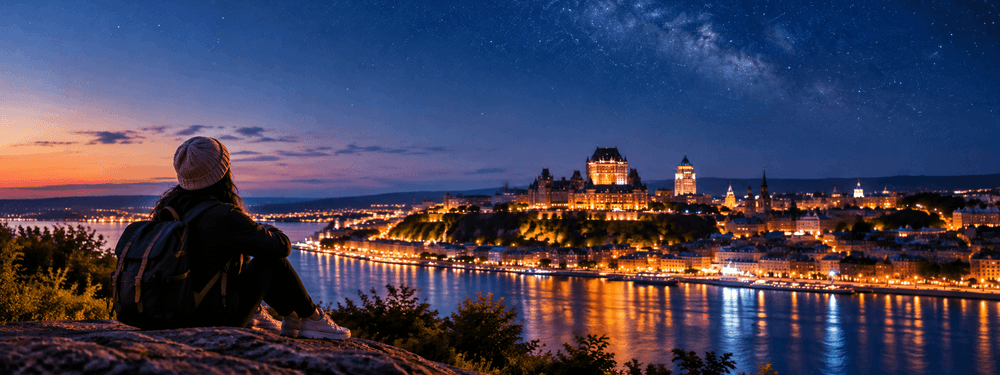
Travel has traditionally followed the sun.
Mornings meant sightseeing. Afternoons were for museums, beaches, hikes, or road trips. Once the sun went down, the day was considered finished.
Quick travel note
For Koursair travelers, the trend fits naturally with experience-led travel, small-group adventures, wellness retreats, wildlife experiences, and destinations such as Costa Rica.
That idea is changing.
A growing number of travelers are planning experiences around sunset, moonlight, darkness, and everything that comes alive after hours. From watching the Northern Lights and joining a night safari to exploring historic cities after the crowds disappear, nighttime is becoming part of the destination itself.
This travel style is often called noctourism.
And it is much more than nightlife.
Noctourism is about experiencing a destination differently after dark. It can mean walking through an old city when the streets are quieter, watching wildlife that only becomes active at night, stargazing far from artificial light, enjoying a late-night food market, or simply sitting somewhere remote under a sky full of stars.
For travelers looking for something slower, more atmospheric, and less predictable, the night offers a completely different way to see the world.
What Is Noctourism?
Noctourism is travel centered around nighttime experiences.
The word combines “nocturnal” and “tourism,” but the idea is fairly simple: instead of treating nighttime as downtime, travelers make it part of the itinerary.
That could include:
- Stargazing in a dark-sky destination
- Northern Lights trips
- Night safaris
- Moonlit hikes
- After-dark city tours
- Night markets and street food
- Evening cultural performances
- Late-night museum visits
- Desert experiences under the stars
- Wildlife watching after sunset
- Night kayaking
- Photography after dark
- Astronomy-focused travel
The important distinction is that noctourism is not simply about going out at night.
It is about experiencing a place when it feels different from the daytime version.
A city can feel completely different after sunset. A rainforest becomes louder. A desert becomes cooler. Wildlife becomes more active. Historic buildings take on a different character under evening lights.
The destination hasn't changed.
Your perspective has.
Why Is Noctourism Becoming Popular?
There isn't one reason behind the rise of nighttime travel.
Several changes in the way people travel are pushing travelers toward experiences after dark.
1. Travelers Want More Meaningful Experiences
Many travelers are moving away from checklist tourism.
Seeing ten attractions in one day may look impressive on an itinerary, but it doesn't necessarily create the strongest memories.
Night experiences tend to be slower.
You might spend two hours waiting for an aurora. You might sit quietly during a night safari. You might walk through an old neighborhood without rushing from one landmark to another.
That slower pace can make the experience feel more personal.
2. Daytime Crowds Are Changing the Way People Explore
Some of the world's most popular destinations can feel completely different once the major daytime crowds leave.
Travelers are increasingly looking for alternative ways to experience famous places rather than simply following the busiest sightseeing schedule.
An evening walk through a historic district, a late museum visit, or an after-dark cultural experience can offer a different perspective without requiring a completely different destination.
3. Warmer Destinations Can Be More Comfortable at Night
In some parts of the world, daytime temperatures can make long sightseeing days uncomfortable, particularly during warmer months.
That has encouraged travelers to shift certain activities toward the evening.
A desert walk at sunset can be far more comfortable than one in the middle of the afternoon.
The same applies to city walks, outdoor dining, markets, and cultural experiences.
4. Travelers Are Looking for Experiences Worth Planning a Trip Around
The best trips often have one or two experiences that become the reason for going.
For some travelers, that might be seeing the Northern Lights.
For others, it could be a night safari in Africa, a desert camp under the stars, or a moonlit landscape in Costa Rica.
Noctourism fits perfectly into this style of travel because the experience itself becomes the centerpiece.
The Best Noctourism Experiences Around the World
Noctourism isn't limited to one type of traveler.
Whether you're interested in wildlife, astronomy, food, photography, culture, or adventure, there is an after-dark experience worth building a trip around.
1. Watch the Northern Lights
Few nighttime experiences are as naturally dramatic as the aurora.
Northern Norway, Iceland, Finland, Sweden, and parts of Canada and Alaska are among the destinations travelers consider for aurora trips.
But seeing the Northern Lights isn't like visiting a monument.
There is no guarantee that you will see them on a specific evening.
That uncertainty is part of the experience.
You may spend several nights watching the sky, checking weather conditions, and waiting for the right combination of darkness and solar activity.
When the lights finally appear, the waiting suddenly makes sense.
2. Go on a Night Safari
Africa is famous for wildlife, but many animals behave very differently after sunset.
A night safari can introduce travelers to species and behaviors they may never see during a traditional daytime game drive.
Predators become active. Nocturnal animals emerge. The sounds of the landscape become much more noticeable.
For wildlife travelers, the night isn't simply another time of day.
It is a completely different ecosystem.
3. Experience a Dark-Sky Destination
You don't need a telescope to appreciate a truly dark sky.
In areas with very little artificial light, the night sky can look dramatically different from what most people see in cities.
The Milky Way becomes easier to see. Constellations become clearer. Long exposures reveal details invisible to the naked eye.
Destinations such as Chile's Atacama Desert, parts of New Zealand, Namibia, Australia's outback, and designated dark-sky areas in the United States have become popular with travelers interested in astronomy.
This also connects naturally with the growing interest in astrotourism.
4. Explore Cities After Dark
Noctourism doesn't always require remote landscapes.
Some of the world's most interesting nighttime experiences happen in major cities.
Tokyo, Kyoto, Rome, Paris, Marrakech, Bangkok, Singapore, and many other cities take on a different atmosphere after sunset.
Restaurants fill up. Markets become busier. Historic buildings light up. Streets become more atmospheric.
Instead of trying to see everything during daylight hours, travelers can build an itinerary around the city's evening personality.
5. Visit a Night Market
Night markets offer one of the easiest ways to experience local culture after dark.
They combine food, shopping, street life, music, and social interaction in one place.
For travelers who want to experience a destination through food, a night market can be more revealing than a formal restaurant.
You see what people actually eat, how they socialize, what local vendors sell, and how neighborhoods change once the sun goes down.
6. Take a Moonlit Walk
Not every noctourism experience needs to be dramatic.
Sometimes it is simply a walk.
A guided walk through a forest, coastline, desert, or mountain landscape under moonlight can create a completely different sense of place.
The reduced visibility forces you to slow down.
You listen more carefully.
You notice sounds, temperature, shadows, and movement that you might ignore during the day.
That makes a moonlit walk especially appealing to travelers interested in slower and more immersive experiences.
Noctourism vs. Nightlife: What's the Difference?
These two ideas are often confused.
Nightlife usually revolves around entertainment, socializing, bars, clubs, concerts, and restaurants.
Noctourism is broader.
A traveler can experience noctourism without drinking, partying, or even visiting a city.
A night safari is noctourism.
So is stargazing in the desert.
So is visiting a historic monument after dark.
So is walking through a rainforest with a naturalist.
The common element is that the nighttime environment is part of the travel experience.
That makes noctourism suitable for couples, families, solo travelers, photographers, wellness travelers, and adventure seekers.
Best Destinations for Noctourism
Different destinations offer completely different versions of after-dark travel.
Iceland
Iceland is a natural choice for travelers interested in nighttime landscapes.
Depending on the season and conditions, travelers can combine evening exploration with opportunities to see the Northern Lights.
The country's dramatic landscapes also make nighttime photography particularly appealing.
Norway
Northern Norway offers a combination of Arctic landscapes, outdoor activities, and aurora experiences.
Tromsø is one of the best-known bases for travelers planning an Arctic trip, while more remote areas can provide a quieter setting away from city lights.
Costa Rica
Costa Rica is particularly interesting for noctourism because of its wildlife.
Many species in tropical forests are active after sunset, creating opportunities for guided night walks.
A nighttime rainforest experience can reveal frogs, insects, reptiles, and other creatures that travelers may never notice during the day.
For travelers visiting Drake Bay and the Osa Peninsula, a night wildlife experience can complement daytime rainforest, wildlife, and adventure activities.
Namibia
Namibia offers vast landscapes, extremely low light pollution in many areas, and excellent conditions for combining desert travel with astronomy.
Imagine spending the day exploring the landscape and ending the evening beneath an open sky filled with stars.
The contrast between the harsh daytime environment and the quiet of the desert at night is part of the appeal.
New Zealand
New Zealand combines dramatic landscapes with some excellent opportunities for stargazing.
The country's dark-sky destinations are particularly attractive to travelers who want to combine outdoor adventure with astronomy.
Japan
Japan offers a completely different form of noctourism.
The experience isn't necessarily about remote wilderness.
Instead, travelers can explore illuminated temples, evening neighborhoods, late-night food culture, traditional performances, and cities that take on a different rhythm after sunset.
Kyoto is particularly interesting because many travelers are beginning to explore popular areas outside the busiest daytime hours.
Noctourism in Costa Rica
Costa Rica deserves special attention because its nighttime experiences go well beyond traditional sightseeing.
The country's tropical ecosystems become incredibly active after sunset.
A guided night walk can introduce travelers to a completely different side of the rainforest.
You might hear movement in the vegetation before seeing anything.
You may spot tree frogs sitting on leaves, insects moving through the forest, reptiles near water, or nocturnal mammals moving through the trees.
The experience requires patience.
And that is exactly what makes it memorable.
For travelers planning a Costa Rica wellness and adventure retreat, a nighttime rainforest experience can work particularly well because it adds another dimension to the trip without requiring a full-day excursion.
You can spend the day hiking, kayaking, exploring beaches, or enjoying wellness activities and experience the rainforest after dark in the evening.
Why Noctourism Fits the Rise of Slow Travel
Slow travel is not necessarily about traveling slowly.
It is about paying attention.
Instead of asking, “How many places can I see?”
The question becomes:
“What can I actually experience?”
Noctourism naturally encourages this mindset.
You can't rush an aurora.
You can't force wildlife to appear.
You can't make the stars brighter.
You have to wait.
You have to observe.
You have to accept that some of the best travel moments happen when you stop trying to control the itinerary.
That makes noctourism a natural extension of the slow travel movement.
The Wellness Side of Night Travel
There is another reason nighttime travel is becoming interesting: it can create space away from the usual pace of sightseeing.
Imagine finishing a busy day and replacing another attraction with a quiet evening under the stars.
No notifications.
No crowded attraction.
No checklist.
Just time to observe your surroundings.
For wellness-focused travelers, experiences such as stargazing, moonlit walks, quiet nature excursions, and evening outdoor activities can complement a broader wellness itinerary.
The goal isn't necessarily relaxation in the traditional spa sense.
Sometimes wellness simply means having enough space to slow down.
How to Plan a Noctourism Trip
Planning nighttime travel requires slightly different thinking than a traditional vacation.
Choose the Experience First
Start with what you want to experience.
Do you want to see the Northern Lights?
Photograph the Milky Way?
Explore wildlife after dark?
Experience a city's night markets?
Once you know the experience, choose the destination.
Research the Best Season
Many nighttime experiences are seasonal.
Aurora trips depend on darkness and solar activity.
Wildlife experiences may vary depending on the season.
Stargazing is affected by cloud cover and moonlight.
Researching the conditions before booking can make a major difference.
Don't Pack the Itinerary Too Tightly
This is particularly important for nature-based noctourism.
If you have an early-morning hike followed by a full day of sightseeing and a late-night wildlife excursion, the experience can quickly become exhausting.
Give yourself breathing room.
One excellent nighttime experience is usually better than three rushed ones.
Consider the Moon
The moon can completely change a nighttime landscape.
A bright full moon can make landscapes easier to see but can reduce the visibility of faint stars.
A darker moon phase can be better for deep-sky stargazing.
If astronomy is the main purpose of your trip, lunar conditions are worth considering when choosing your dates.
Bring the Right Gear
Your packing list will depend on the experience, but useful items can include:
- Warm layers
- Comfortable walking shoes
- Small flashlight or headlamp
- Red-light mode for astronomy
- Insect repellent for tropical destinations
- Camera and tripod
- Extra batteries or power bank
- Water
- Lightweight rain protection
- Binoculars for wildlife viewing
Avoid using bright phone screens constantly during stargazing experiences.
Your eyes need time to adjust to darkness.
Is Noctourism Safe?
It can be, provided travelers treat nighttime environments differently from daytime sightseeing.
Don't explore unfamiliar wilderness areas alone at night.
Use qualified local guides for wildlife and rainforest experiences.
Follow park regulations.
Stay on designated trails.
Check local transportation options before heading out.
And if you're visiting a city, research which neighborhoods are appropriate for nighttime exploration.
The safest noctourism experiences are usually those planned with local knowledge.
Who Should Try Noctourism?
Noctourism isn't limited to adventure travelers.
Couples
A nighttime experience can add something different to a romantic trip, whether it's stargazing, a private dinner outdoors, or an evening wildlife experience.
Solo Travelers
Night experiences can be a good way to join a small guided group while experiencing something specific to the destination.
Families
Wildlife walks, astronomy programs, and night markets can be especially engaging for older children and teenagers.
Photographers
Night landscapes, city lights, wildlife, and astrophotography provide an entirely different set of creative opportunities.
Wellness Travelers
Quiet nighttime experiences can complement retreats focused on nature, mindfulness, and personal reset.
Adventure Travelers
Night kayaking, jungle walks, desert excursions, and wildlife safaris add a different level of adventure without necessarily requiring extreme physical activity.
The Future of Noctourism
Travel is becoming less about simply arriving somewhere and more about choosing how you experience it.
That is why trends such as slow travel, wellness travel, astrotourism, small-group travel, and noctourism are increasingly overlapping.
A traveler might visit Costa Rica for wellness and adventure, add a rainforest night walk, spend another evening stargazing, and still have time to enjoy the beach.
The trip doesn't need more attractions.
It needs better experiences.
Noctourism also offers destinations a way to spread tourism beyond the traditional daytime hours. Instead of concentrating every visitor around the same landmarks at the same time, destinations can encourage travelers to explore different experiences throughout the day and evening.
For travelers, that can mean quieter experiences.
For destinations, it can mean a more balanced tourism model.
10 Noctourism Experiences Worth Adding to Your Travel List
If you're planning a future trip, consider adding one of these experiences:
1. Watch the Northern Lights in Norway or Iceland
2. Take a guided night safari in Africa
3. Explore the rainforest after dark in Costa Rica
4. Stargaze in Chile's Atacama Desert
5. Spend an evening in a traditional Asian night market
6. Photograph a city skyline after dark
7. Take a moonlit desert walk
8. Join a guided astronomy experience
9. Explore a historic city on an evening walking tour
10. Spend an evening outside with nothing planned except watching the sky
Final Thoughts
The best thing about noctourism may be that it doesn't ask travelers to visit another destination.
It asks them to experience the destination they already chose differently.
A rainforest isn't the same at midnight.
A desert isn't the same under a full moon.
A city isn't the same after the crowds disappear.
And a sky filled with stars can make even the simplest evening feel like part of the trip.
Travel doesn't stop when the sun goes down.
Sometimes, that's when it really begins.